
See our Solar Battery Installation cost guide →
Solar Battery Installation
Australia's vetted network of CEC-accredited battery storage installers. Get free quotes from insured, licensed specialists.
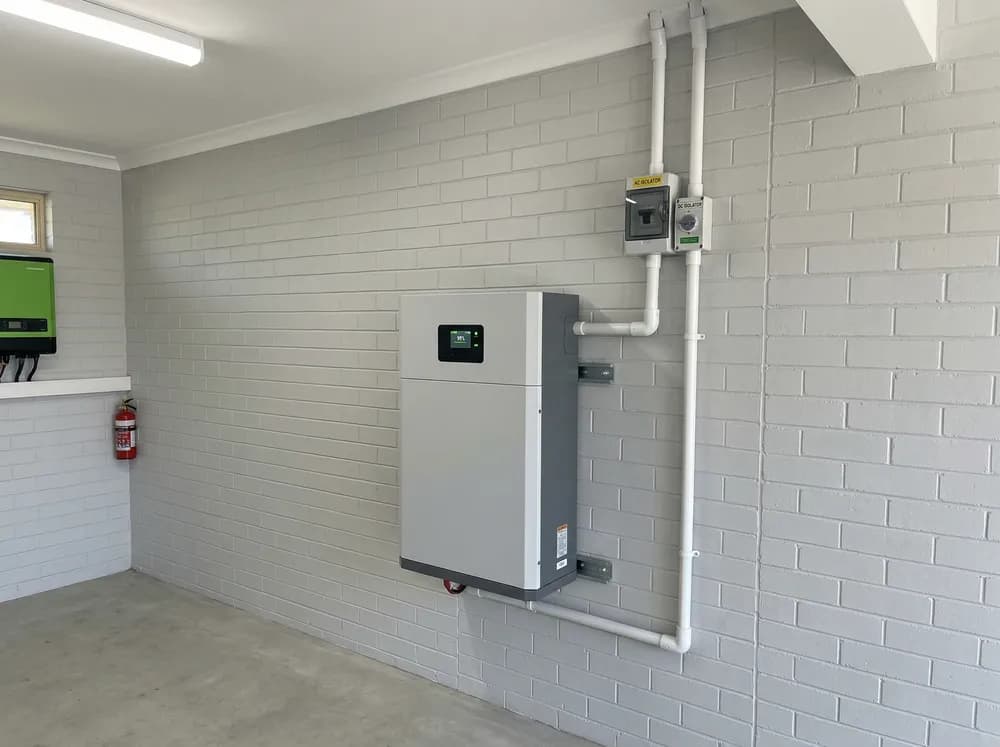
Professional Solar Battery Installation Across Australia
Australian households are adding battery storage to capture excess solar generation, cut reliance on the grid during evening peaks, and maintain power during outages. Whether you are pairing a battery with an existing rooftop system or commissioning a full solar-plus-storage setup from scratch, the inverter compatibility, battery chemistry, and installation approach all determine how well the system performs over a 10-year warranty period. Our network of CEC-accredited installers helps you get the design right the first time.
Why use a CEC-accredited battery installer?
- CEC accreditation is required to access government battery rebates in participating states
- Grid-connected battery systems require a licensed electrical contractor
- Correct battery sizing based on your actual load profile, not just panel output
- Inverter compatibility checked before purchase — AC-coupled vs DC-coupled systems differ significantly
- Manufacturer warranties require accredited installation to remain valid
AC-coupled vs DC-coupled — what your installer will assess
If you already have a standard string inverter, adding a battery usually means AC-coupled storage — a separate hybrid or battery inverter is added alongside it. If you are building a new system or replacing your inverter, a DC-coupled hybrid inverter handles both the panels and battery in one unit and is generally more efficient. Your installer will check your current inverter brand and switchboard capacity before recommending a path.
Frequently asked questions
A typical residential battery system costs between $8,000 and $18,000 fully installed, depending on usable capacity, battery brand, and whether the inverter needs replacing. A 10 kWh system (e.g. Sungrow SBR, BYD HVS, or similar) with a compatible hybrid inverter sits roughly in the $10,000–$14,000 range. A Tesla Powerwall 3 (13.5 kWh, built-in inverter) generally runs $13,000–$17,000 installed. State rebates — where available — can reduce the out-of-pocket cost by $1,000–$4,000.
A useful starting point is your average evening and overnight consumption — typically 5–15 kWh for an Australian household. A 10 kWh usable battery covers most homes through a typical evening peak. If you have an EV, pool, or ducted air conditioning running at night, sizing up to 13–20 kWh makes sense. Your installer will model your actual usage data rather than guessing.
It depends on the brand and age. Many modern inverters are hybrid-ready and just need an approved battery connected. Older string inverters often require an AC-coupled battery inverter added in parallel. A small number of very old systems may be more cost-effective to upgrade entirely. Your installer will confirm compatibility during the site assessment — it is not safe to assume.
State-level battery rebates exist in Victoria (SolarHomes), South Australia (Home Battery Scheme), the ACT, and Queensland at various times. Eligibility, rebate amounts, and approved product lists change frequently. Your installer will confirm current availability — but always check the official state energy website as well, as some schemes are income-tested or capacity-limited.
Get quotes from Supertrades partners across Australia
Victoria
NSW
Queensland
Western Australia
South Australia
Tasmania
Northern Territory
ACT
Install solar batteries?
Homeowners across Australia are already requesting quotes for this work. Join the network and we'll email you job briefs for your area.
- Job briefs straight to your inbox
- Only jobs in the cities you cover
- Takes about 2 minutes to join