
See our Solar Panel Installation cost guide →
Solar Panel Installation
Australia's vetted network of Clean Energy Council accredited solar installers. Get free quotes from insured, CEC-approved specialists.
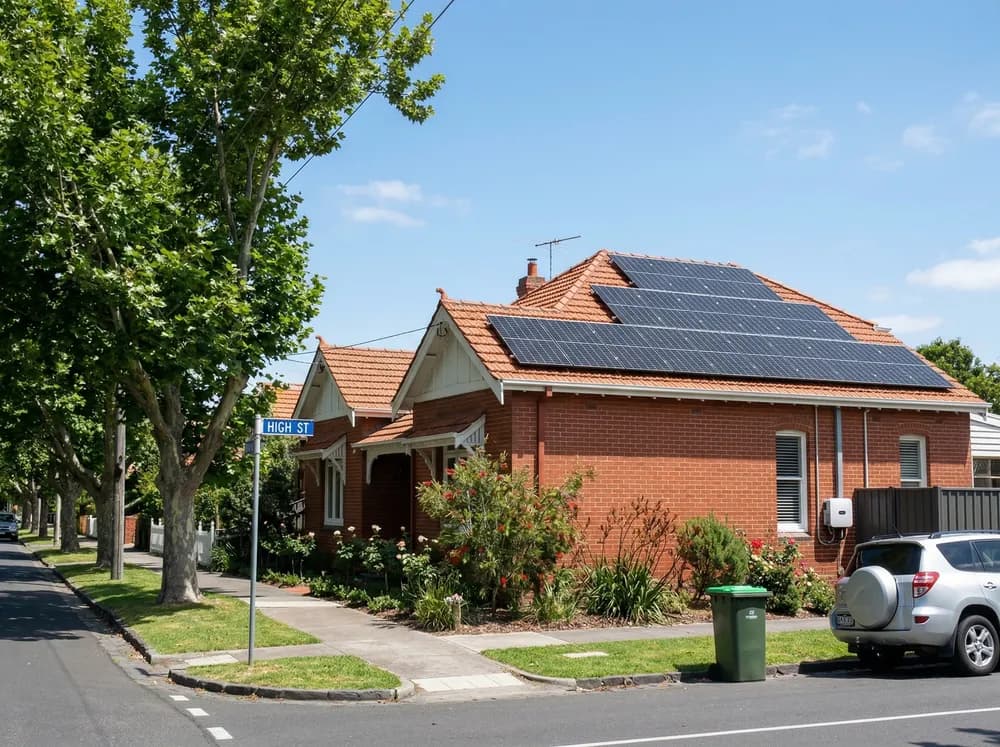
Professional Solar Panel Installation Across Australia
Australia has some of the highest rooftop solar uptake in the world, and for good reason: our sunshine resource is exceptional and electricity prices are among the highest in the OECD. Getting the system design right — correct sizing, shading analysis, inverter selection, and metering setup — determines whether you hit your payback targets or fall short.
Why use a CEC-accredited installer?
- CEC accreditation is required to access federal STC rebates (STCs)
- Grid connection approval requires a licensed electrical contractor
- Correct system sizing based on your actual usage profile and roof area
- Manufacturer warranties are only valid with accredited installation
- Workmanship warranty and insured against roof penetration issues
Sizing your system
A 6.6 kW system (roughly 16–20 panels) is the most common residential choice in Australia, maximising the 5 kW inverter sweet spot while leaving room for future battery addition. Higher usage homes, EV owners, or those with pool pumps often benefit from 10 kW or larger. Your installer will model your bill against available roof space to find the best match.
Frequently asked questions
A quality 6.6 kW system typically costs $5,000 to $10,000 after the federal STC rebate is applied at point of sale. Larger 10 kW systems run $7,500 to $12,000. Battery storage adds $8,000 to $15,000 depending on capacity. Prices vary by state, roof complexity, and panel/inverter brand. Always compare quotes on the same panel and inverter specifications.
Most Australian households see payback in 3 to 6 years depending on system size, self-consumption rate, feed-in tariff, and electricity price. Homes that use most of their solar during the day (e.g. with pool pumps, home offices, or EV charging) generally see faster payback than those exporting most generation.
Yes, most modern hybrid inverters are battery-ready. If you plan to add storage in future, tell your installer upfront so they specify a compatible inverter now. Retrofitting battery storage to an older string inverter often requires an inverter upgrade, which adds cost.
The federal Small-scale Technology Certificate (STC) scheme provides an upfront point-of-sale discount applied automatically by your installer. Several states also offer additional interest-free loans or rebates (e.g. Victoria's Solar Homes program, South Australia's Home Battery Scheme). Your installer will confirm what is available in your postcode.
Get quotes from Supertrades partners across Australia
Victoria
NSW
Queensland
Western Australia
South Australia
Tasmania
Northern Territory
ACT
Install solar panels?
Homeowners across Australia are already requesting quotes for this work. Join the network and we'll email you job briefs for your area.
- Job briefs straight to your inbox
- Only jobs in the cities you cover
- Takes about 2 minutes to join