
See our Glass Pool Fencing cost guide →
Glass Pool Fencing
Australia's vetted network of licensed pool barrier installers. Get free quotes from insured glass fencing specialists who understand state pool safety requirements.
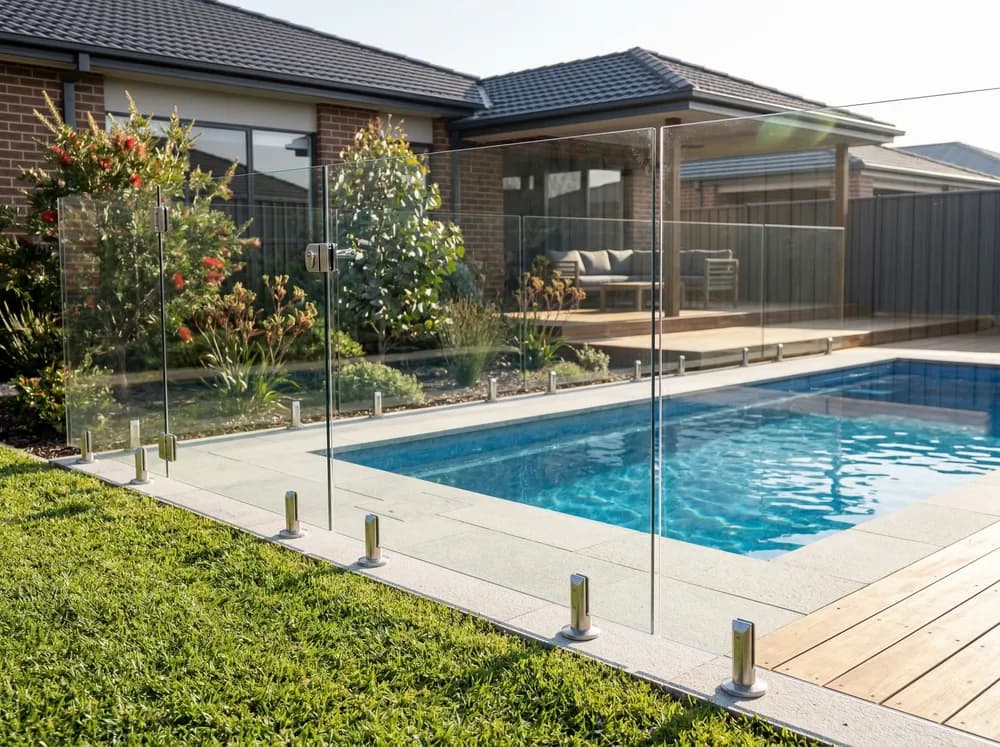
Professional Glass Pool Fencing Across Australia
Frameless and semi-frameless glass keeps your pool area open while meeting Australian pool safety barrier rules. A specialist installer makes sure the barrier height, gaps, and gate hardware satisfy your state's current standards—not just the day of install, but for certification and re-inspection years later. Our vetted network handles new pools, full replacements of dated tubular fencing, and select sections where the glass is damaged or hardware has failed.
Why use a pool barrier specialist?
- Panel thickness, spigot spacing, and base fixings chosen for your coping and sub-base
- Gates with compliant self-closing, self-latching, and latching height
- Clear advice on the non-climbable zone, boundary line rules, and council or inspector requirements
- Toughened safety glass and marine-grade hardware where you need extra corrosion resistance
- Removals and disposals of old steel or glass runs priced up front, not as a surprise
Frameless vs semi-frameless
True frameless systems use spigots or base channels and minimal top caps for an uninterrupted look. Semi-frameless uses posts between panels—often a little more forgiving on out-of-level coping and may suit tighter budgets. Your installer will check wind exposure, fixing depth, and the pool surround build-up before signing off on a system warranty.
Frequently asked questions
Supply and installed glass pool barriers in Australia often fall roughly between $200 and $600+ per linear metre installed, depending on glass thickness, spigot or channel system, number of gates, site levels, and hardware grade. Tight access, long panels, or premium marine finishes move quotes toward the top of the range. Request itemised quotes that separate glass, hardware, gates, and removal of existing fencing. Typically the average cost is $300 - $400 per linear metre.
A reputable installer works to the current National Construction Code pool safety provisions and your state implementation (height, effective barriers, and gate operation). In many states you need a final inspection or form of compliance. Ask your installer which certificate is issued on completion and book your inspector in the same sequence they recommend for your council.
Pool-grade barriers use toughened safety glass designed to shatter in small, blunt fragments if ever broken, and the panels are specified for the span between fixings. Hardware is made for external pool chemistry and UV. Still avoid climbing points near the barrier, keep the clear zone of any climbable object in mind, and follow your installer on maintenance and hinge adjustments.
Get quotes from Supertrades partners across Australia
Victoria
NSW
Queensland
Western Australia
South Australia
Tasmania
Northern Territory
ACT
Install glass pool fencing?
Homeowners across Australia are already requesting quotes for this work. Join the network and we'll email you job briefs for your area.
- Job briefs straight to your inbox
- Only jobs in the cities you cover
- Takes about 2 minutes to join