
See our Floating Floorboards Installation cost guide →
Floating Floorboards Installation
Get competitive quotes for floating floorboards installation from trusted local tradespeople across Australia with Supertrades.
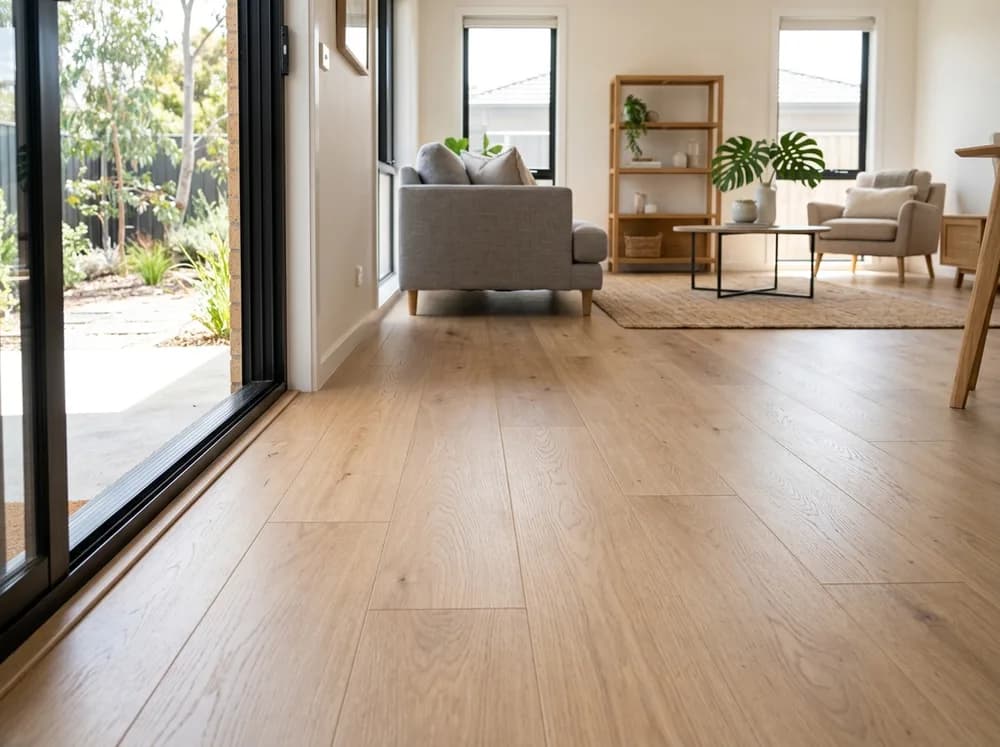
Transform Your Space with Floating Floorboards
Floating floorboards are a popular choice for homeowners looking to enhance their interiors. They offer the beauty of timber while providing a quick and easy installation process. With Supertrades, you can effortlessly connect with local experts who specialise in floating timber floorboards, ensuring your project is completed to the highest standard.
Why Choose Floating Floorboards?
- Quick installation process, ideal for busy homeowners
- Variety of styles, including laminate floating floorboards and natural timber options
- Cost-effective solution compared to traditional floor installation
- Easily replaceable and maintainable
Understanding Floating Floorboards Cost
- Fully supplied and installed floating floorboards in Australia typically cost $50 to $150 per m².
- Labour alone is often $30 to $40 per m²; laminate runs about $35 to $80, hybrid (SPC) $55 to $110, luxury vinyl plank $50 to $150, and engineered timber $90 to $220 per m² supply and install.
- Budget for extras such as underlay ($5 to $15 per m²), old floor removal ($10 to $30 per m²), subfloor levelling ($25 to $70+ per m²), and trims or transitions ($20 to $40 each).
The Installation Process
Laying floating floorboards is a straightforward process, often requiring minimal tools. While many homeowners opt for professional floating wood floor installation, it is possible to do it yourself with the right guidance. Supertrades connects you with experienced tradespeople who can assist with every step, ensuring a flawless finish.
Frequently Asked Questions
Frequently asked questions
The average cost to install floating floorboards in Australia ranges from $50 to $150 per square metre fully supplied and installed. Labour alone typically costs $30 to $40 per square metre, while materials range widely depending on whether you choose budget laminate or high-end engineered timber.
Some downsides of floating floorboards include susceptibility to moisture and temperature changes, which may cause warping over time.
Under floating floorboards, it is essential to use an appropriate underlay to provide cushioning and moisture protection.
Yes, you can install a floating floor yourself if you have the right tools and follow proper guidelines.
In general, carpet can be cheaper than floating floorboards, but floating options provide better durability and aesthetics.
The most regretted flooring choices include low-quality laminate and overly trendy styles that quickly go out of fashion.
Floating floors typically last between 10 to 30 years, depending on the quality of materials and maintenance.
Downsides of floating floors can include noise, potential instability if not installed correctly, and limited refinishing options.
Engineered timber floating floors typically cost $90 to $220 per square metre supply and install, depending on the timber type and finish. Laminate is usually $35 to $80 per m², hybrid (SPC) $55 to $110, and luxury vinyl plank $50 to $150.
Yes, it is generally easy to install floating floorboards, especially with click-lock systems designed for DIY installation.
Yes, it is recommended to put underlay under a floating floor to enhance comfort and reduce noise.
Yes, a floating floor does need underlay to provide cushioning and moisture control.
Get quotes from Supertrades partners across Australia
Victoria
NSW
Queensland
Western Australia
South Australia
Tasmania
Northern Territory
ACT
Install floating floorboards?
Homeowners across Australia are already requesting quotes for this work. Join the network and we'll email you job briefs for your area.
- Job briefs straight to your inbox
- Only jobs in the cities you cover
- Takes about 2 minutes to join