
See our Cavity Wall Insulation cost guide →
Cavity Wall Insulation
Get fast and easy quotes for cavity wall insulation across Australia with Supertrades.
Why Choose Cavity Wall Insulation?
Cavity wall insulation is an effective solution to enhance your home's energy efficiency. By filling the gap between your walls, it helps maintain a comfortable indoor temperature, reducing energy bills and improving your home's overall comfort.
Benefits of Cavity Wall Insulation
- Improves thermal performance
- Reduces energy costs
- Minimises noise pollution
- Enhances property value
- Environmentally friendly option
Types of Cavity Wall Insulation
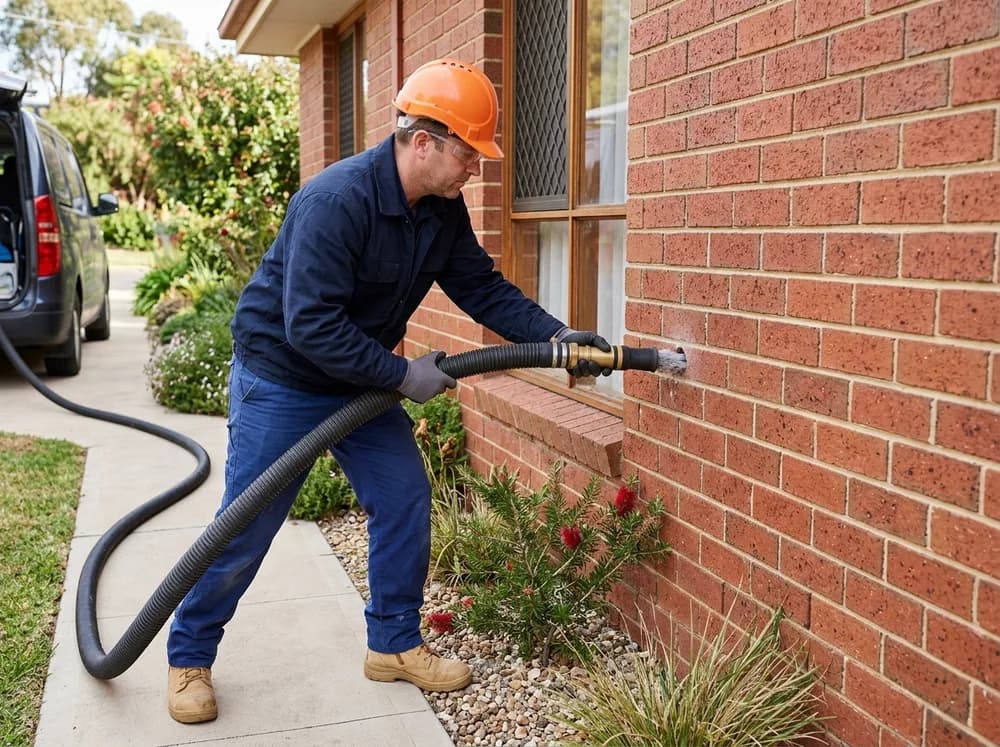
- Blow in wall insulation: Ideal for retrofitting existing walls.
- Pump in wall insulation: Injected into the cavity for maximum coverage.
- Brick cavity wall insulation: Specifically designed for brick structures.
Installation of wall insulation can be done quickly and efficiently by our vetted professionals. With Supertrades, you can compare quotes from local experts who specialise in wall insulation installation.
Understanding Wall Insulation Cost
The wall insulation cost can vary based on several factors including the type of insulation used, the size of the cavity, and the complexity of the installation. Request quotes today to find the best price for your needs.
Frequently asked questions
Most brick veneer and double brick homes have a gap that can be filled. Solid brick has no gap, so this job does not apply. An installer checks the cavity is clear before drilling the mortar.
The best insulation for walls in Australia typically includes materials like expanded polystyrene, mineral wool, and polyurethane foam, depending on your specific needs.
Your house may feel cold due to factors like poor installation, inadequate insulation, or air leaks elsewhere in your home.
Brick veneer has a cavity behind the outer brick. Installers blow or pump the fill in through small holes in the mortar, then patch the holes.
The R-value of a brick veneer wall typically ranges between 1.0 to 1.5, depending on thickness and insulation used.
A filled cavity slows heat moving through the walls, so the house holds its temperature with less heating and cooling. The cavity has to be clear, and the holes in the mortar are patched when the job is done.
Some downsides include the potential for moisture issues if not properly installed and the need for professional installation.
A 50 mm cavity is narrow, but blown mineral wool or beads can still go in through drilled mortar holes. The installer checks the gap is clear first.
Get quotes from Supertrades partners across Australia
Victoria
NSW
Queensland
Western Australia
South Australia
Tasmania
Northern Territory
ACT
Insulate cavity walls?
Homeowners across Australia are already requesting quotes for this work. Join the network and we'll email you job briefs for your area.
- Job briefs straight to your inbox
- Only jobs in the cities you cover
- Takes about 2 minutes to join